

An Overview of The Guide of the Luminaries in Yemeni Art and Literature
Yemenat
Mohammed Al-Mekhlafi
Amid one of the most challenging periods in Yemen’s history, when destruction threatens everything and attempts are made to erase memory, the need to preserve beauty and identity emerges with extraordinary force.
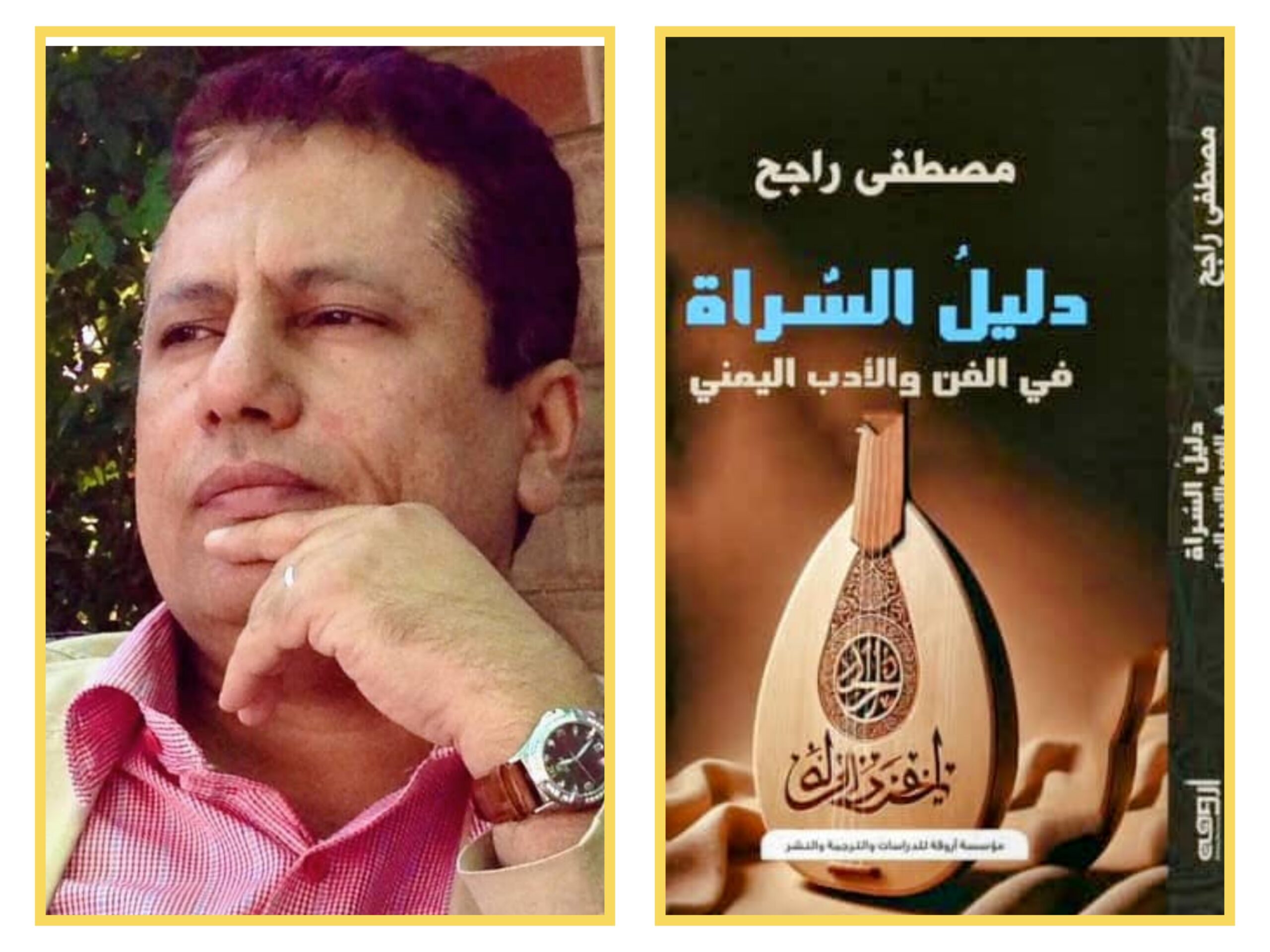
It is in this spirit that the Yemeni researcher and writer Mustafa Rajeh presents his book, The Guide of the Luminaries in Yemeni Art and Literature, published by Arweqa for Studies, Translation, and Publishing in Cairo, this year 2025.
Spanning 347 pages, the book is a heartfelt endeavor to preserve collective memory and map the Yemeni soul, exploring the richness of art and literature and the enduring resonance of Yemeni culture during turbulent times.
The work is a collection of essays united by a single theme: the expression of Yemeni cultural identity through art and literature. Divided into four chapters, it gathers diverse voices and experiences to offer a panoramic view of Yemen’s creative paths and the resilient spirit that sustains its culture despite adversity.
Rajeh, long known for his political and analytical writings, has recently embraced literary expression, discovering a voice that is both personal and profound. In this journey, he combines the sensitivity of a writer with the insight of an analyst, producing work that captivates readers seeking a perspective bridging artistry and critical thought.
Renowned for his breadth of knowledge, Rajeh stands apart in his approach to cultural figures and phenomena. A voracious reader, he draws inspiration from philosophy, literature, history, and even physics, crafting critical insights informed by both intellect and intuition.
His prose is never weighed down by academic rigidity or historical dryness. It carries his humanity and personal engagement, making it accessible and deeply resonant for readers. Before writing about any figure, Rajeh immerses himself in references, engages in dialogue with intellectuals, and consults those close to his subjects to gather accurate and intimate accounts of their lives.
When discussing an artist or singer, he listens closely to their works, tracing their range across styles and forms to form a vivid and nuanced portrait. This careful attentiveness often surprises the subjects themselves, who sometimes remark, “You have expressed what we wished to convey.”
In the introduction, Rajeh sets a defiant yet hopeful tone. He urges readers not to dwell on destruction but to reclaim the finest aspects of Yemeni identity and its unbreakable spirit. He asserts that speaking of cultural identity is no longer a luxury but a vital necessity in the face of fragmentation and turmoil.
When everything seems threatened, art and literature emerge as beacons of light, guiding us toward our inner sources of strength. Through the legacy of poets, novelists, and artists, we encounter a Yemen untainted by ruin and war, pure in its essence.
Rajeh emphasizes that every creative contributor has shaped the aesthetic consciousness of Yemenis, offering a vision that reconnects us with the roots of national identity and empowers us to withstand division and hardship. Art and literature, by awakening life within us, cultivate resilience and hope amidst the harshness of reality.
From the very first pages, the book feels like a journey through the landscapes of Yemeni creativity, structured with the elegance of a muwashshah: beginning with an opening, building through voices and stories, and concluding with reflective closures.
Chapter One explores the craft of writing, from the humble notebook to daily practice, pondering the nature of poetry and the arts. Rajeh emphasizes that writing is not merely the recording of events but a path to self-discovery and understanding the other, linking poetry, song, and artistic expression while reflecting on creators from Abdul Rahman Al-Ghabri to José Saramago, and the challenges of humanity in the modern technological era.
Chapter Two highlights Yemeni figures who shaped cultural identity—writers, intellectuals, and artistic pioneers alike—celebrating influential figures such as Hashim Ali, Abdul Karim Al-Razhi, Abdul Rahman Bajash, and Abdul Bari Taher, and their contributions to nurturing national and cultural awareness. It also revisits musical and vocal traditions, showcasing the living heritage of Yemeni song, exemplified by artists like Hamoud Al-Oudi.
Chapter Three delves into singing and vocal arts as core expressions of Yemeni identity, tracing the journeys of performers from their early steps to their peaks, including Hussein Mohib, Sultan Al-Lahji, and Al-Qamandan, while examining the influence of circumstance and patriotic belonging on their artistic passion. It highlights the social and national significance of Yemeni songs, spanning Lahji, Hadhrami, and Sanaa traditions.
Chapter Four closes with philosophical and emotional reflections, bridging historical influences from Turkish singing to the revival of Yemeni musical memory through Zomals, Ahmed Bin Goudel, and Al-Bardouni. Rajeh underscores the link between art and national identity, citing the impact of artists from Al-Kuraimi to Maafri and Van Gogh, affirming that art embodies the pulse of society and preserves Yemeni memory and spirit amid life’s challenges.
In conclusion, The Guide of the Luminaries is far more than a book. It is a companion that asks a profound question: How do we live amid destruction? Its answer is clear: through beauty. Art gives life meaning, and literature imparts resilience and soul.
This book itself stands as a testament to Yemen’s enduring vitality. Despite adversity, it continues to live, breathe, and inspire.