

Farewell, EXCEED .. It Was Not an Easy Decision
Yemenat
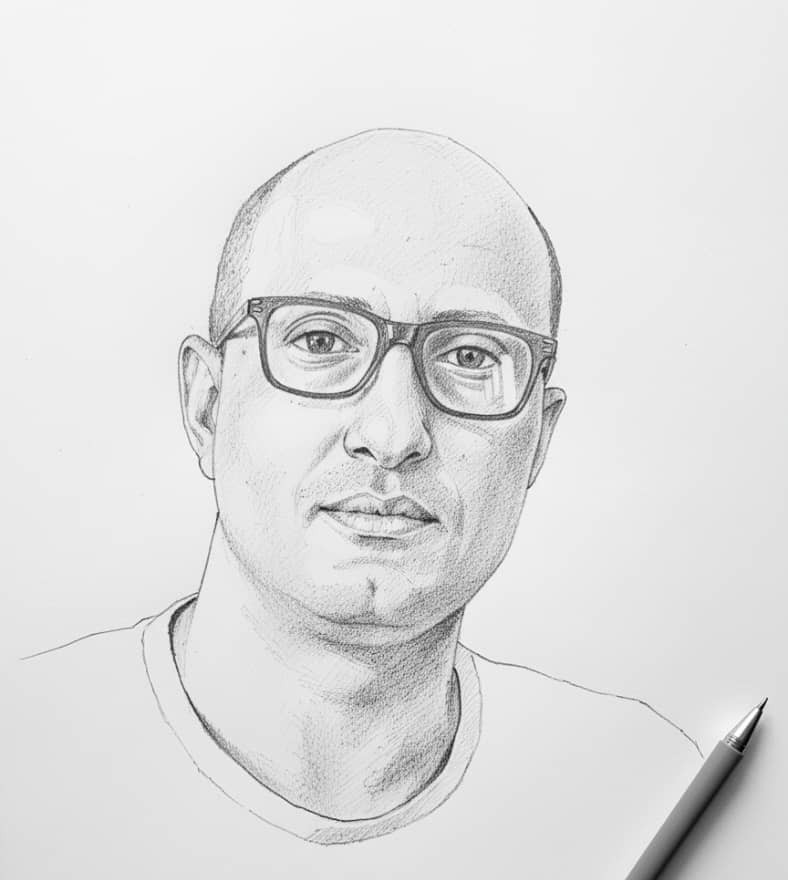
Mohammed Al-Mekhlafi
One day in December 2014, at around ten o’clock in the morning, I was lying on my bed, absorbed in reading The Old Man and the Sea by the American writer Ernest Hemingway, a Nobel Prize laureate. I was alone in the house when my mobile phone rang. I answered the call.
“Hello.”
“Hello. This is EXCEED Institute. Is this Mohammed Al-Mekhlafi?”
“Yes.”
I immediately got to my feet.
“You have been accepted at EXCEED Institute.”
I thanked the caller, still trying to take it all in.
My joy was beyond words. I wandered from one room to another and into the living room, repeating, (Alhamdulillah… Alhamdulillah) (Praise be to God). I had been accepted at EXCEED Institute and had become an English teacher at one of the finest English language institutes in Yemen.
Later that day, when my family returned home, I shared the news with them, and they were overwhelmed with joy. We celebrated by going out to a restaurant and then to a park, savoring moments of pure happiness whose warmth we still feel to this day.
That came after a series of examinations and interviews. I still remember my first day there. I found myself gazing at the place. There were three buildings, each consisting of five stories, set within a spacious courtyard lined with carefully arranged green trees, areas designated for table games, basketball, and other sports activities, as well as a cafeteria, a prayer room for male students, and another for female students.
The courtyard and hallways were crowded with students. They spoke English in an atmosphere that, for a moment, made me feel as though I were no longer in Yemen but somewhere else entirely.
My day began at seven o’clock every morning. I would leave my apartment near the old Sana’a University campus and head to the institute on Algeria Street. I walked for about half an hour each day, and that walk became part of my daily routine.
I walked quietly with my headphones on, sometimes listening to lectures in English and, at other times, mentally revisiting drafts of articles I was trying to write. At that hour, my mind was at its calmest, before the pressures of the workday began.
I would arrive at the institute half an hour before the workday started. My first stop was Muneer’s cafeteria next to the institute, where I had breakfast and chatted for a while with Yasser and Muneer. Our conversations usually revolved around the state of the country and the challenges it was facing.
As half past eight approached, I would be in the teachers’ room preparing classroom activities, collecting the teaching materials the administration had prepared, and then heading to my classroom, where the most vibrant part of my day would begin.
The classroom was where I found my true passion. It was there that my worries faded away, and I felt genuine happiness whenever I saw my students engage with me, understand the lesson, and take another step forward in their learning. That was how I spent my days until 4:15 in the afternoon.
We received generous salaries in U.S. dollars, and I taught for nearly three academic terms before the war began. The institute was forced to close for about seven months, during which we received no salaries, surviving only on a modest advance payment that helped us meet our basic needs.
When we finally returned, we resumed our work with the same enthusiasm and dedication, only to be confronted later with a decision to pay salaries in Yemeni rials instead of U.S. dollars, using an exchange rate of 250 rials to the dollar, as was adopted by both public and private institutes and universities.
The institute continued its educational mission with distinction, offering outstanding curricula while investing in the professional development of its teachers through continuous training in the latest teaching methods.
As members of the teaching staff, we underwent regular monthly training, accompanied by careful and continuous performance evaluations.
The institute also developed supplementary learning materials alongside the core curriculum to help students strengthen their listening, speaking, reading, and writing skills, with particular emphasis on listening and speaking as the foundation of language acquisition.
In addition, there was a semiannual evaluation system through which monetary awards were presented in a competitive environment designed to encourage higher standards of performance.
Despite the difficult circumstances facing the country, EXCEED Institute remained resilient under its wise leadership, continuing to fulfill its educational mission while maintaining the high standards for which it had become known.
At the end of 2022, I received a job opportunity abroad, which compelled me to submit my resignation. I still remember the institute’s director saying to me, “I wish you a brighter future and a happier life. EXCEED will always be open to you whenever you wish to return.” I thanked her and expressed my appreciation for her kindness, generosity, and gracious treatment.
I traveled abroad, but fate had other plans, and I returned after only a short time. After my resignation, I contacted the director, arranged my return, and resumed my work just as before, with the same benefits and conditions. My sincere gratitude and appreciation go to her.
In recent years, especially this year, the situation deteriorated dramatically. The institute searched for solutions that would allow it to continue providing education at the same high standard while preserving its employees’ jobs at a time when alternative employment had become extremely difficult to find. To achieve that, it was ultimately forced to reduce staff salaries, a painful but necessary measure to ensure the institute’s survival.
About two weeks ago, during the last academic term, my final days at EXCEED came to an end. I submitted my resignation carrying a profound sadness within me. I left this great educational institution, one that has graduated thousands of students, many of whom now hold distinguished positions both inside Yemen and abroad, not because I wanted to, but because life had simply become unbearable.
I was not even able to say goodbye to many of my colleagues because some farewells are simply too heavy for the heart.
On my last day, my colleague, Mr. Ahmed Al Quladhi, and I were walking down the stairs of the Stanford Building. I paused for a moment, looked at the staircase stretching before us, and asked him,
“I wonder how many steps I have climbed and descended on these stairs throughout all my years here. Today, these are my last steps.”
He did not answer, but the silence spoke more eloquently than words, as though the staircase itself was sharing in our final farewell.
I must also extend my heartfelt thanks to the management of EXCEED Institute, each and every one of them, regardless of position, for their professionalism, unwavering support, and cooperation throughout my years of service.
They were always close to us, so much so that we never felt there was a barrier between managers and employees. Instead, we felt like one family working toward a common purpose.
Those nearly twelve years were among the happiest of my life. During them, I learned a great deal and gained invaluable teaching skills and experience, which will always make me proud to have been a member of the teaching staff at this distinguished educational institution.
Nor can I forget the institute’s custodial staff, who were an inseparable part of the place itself. Early every morning, they prepared the hallways and classrooms, quietly and faithfully maintaining the cleanliness and order of the institute.
I often spent time talking with them, and our conversations were always marked by warmth and familiarity. As the years passed, they became part of the enduring memory of a place I will never forget.
We live in a country where a person, upon reaching their mid forties, may find themselves unable to provide even the most basic necessities for their family or fulfill their obligations to others. In the end, all that remains is the patience to endure what should never have to be endured.