

Yemen Writes Despite Everything
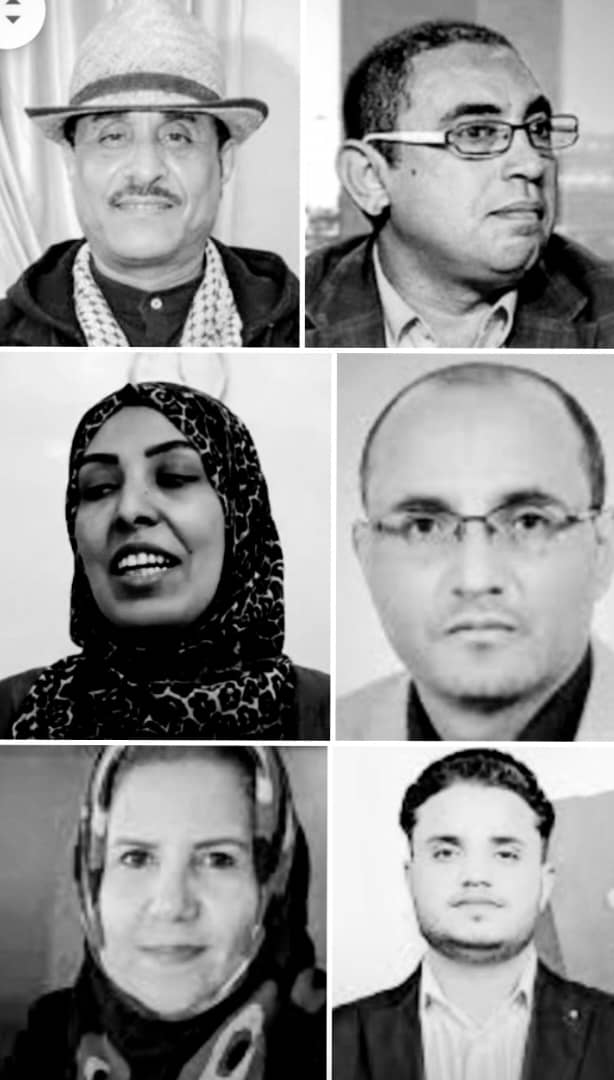
Yemenat
Mohammed Al–Mekhlafi
Yemen is going through one of the harshest periods in its modern history, a time that has weighed heavily on people and exhausted the details of their daily lives.
From the suspension of salaries and the tightening of livelihoods to the absence of stability, hardship has become a defining feature of everyday existence.
The Yemeni public employee has been among those who have paid the highest price for this crisis, often finding themselves unable to meet even the most basic necessities of life.
Within this difficult reality, writers, intellectuals, and poets have not been spared suffering. On the contrary, they have been among the most affected groups.
Despite these conditions, many have remained steadfast. They continued to write, create, and publish, producing notable works throughout these difficult years.
Let us focus on a single year, 2025. In that year alone, significant literary works were released, some of which received prestigious Yemeni and Arab literary awards.
Among these achievements is the novelist Nadia Yahya Hussein Al Kawkabani, who won Naguib Mahfoudh Award for Arabic Fiction for her novel Not (This is not the Story of Abdo Saeed.) This recognition affirmed the presence of Yemeni narrative writing within one of the most respected Arab literary prizes.
The novelist Hamid Al Ruqaimi also received the Katara Prize for Arabic Fiction for his novel (Memory Blindness) in the category of published novels. This award is dedicated to supporting Arabic fiction and promoting its translation into other languages.
On the local level, the Yemeni Narrative Award known as (Hazawi) played an important role in highlighting new literary voices. Among the winning works in the unpublished novels category were (The Silicon Prophecy) by Ahlam Al Maqaleh and (When Love Sees) by Sadiq Abdullah Al Wasabi.
These awards, despite their limited scope, reflect the continued presence of Yemeni writers on the literary scene and their ability to produce and compete under extremely difficult circumstances.
In the same context, writer, poet, and critic Alwan Al Jilani published one of his four books titled (Shams Al Shumous – Abo Al Ghaith Bin Jameel – Scholarly Edition.)
All four books are ready for publication and are scheduled to be released successively at the beginning of the new year, marking the start of further publications and sustained creative output.
Even those living in exile have continued to produce extensively, as if writing has become a form of resistance rather than merely an act of creativity.
Within this broader picture, Yemeni writer Hamid Oqabi, who resides in France, stood out with a remarkable literary project during 2025.
In a single year, he published forty four books containing forty eight literary works. This was achieved without any financial support from Yemeni, Arab, or European institutions. He relied entirely on personal effort and a firm belief that writing does not wait for ideal conditions, devoting nearly fifteen hours a day to reading and writing.
His works span fiction, theater, poetry, literary criticism, and film criticism, in addition to bilingual texts and unproduced screenplays. He frequently employs short novels, scenes reminiscent of cinematic montage, and direct theatrical texts, as if the literary form itself reflects a fragmented and fast paced world.
Despite the absence of official support, Oqabi was not isolated. His creative partnerships included collaboration with critic, translator, and publisher Hatem Al Shamma on translating the novel (The Mother Tree) into English, along with other critical works.
He also worked with me, Yemeni writer and translator Mohammed Al Mekhlafi on translating theatrical texts, in addition to collaborations with publisher and poet Ahmed Al Fallahi, founder of Atyaf Publishing and Translation House, as well as several Arab and European publishing houses.
Literary creativity remains a living testament to the patience of Yemenis and their capacity for resilience. Writers, novelists, and poets, whether inside the country or in exile, transform the hardships of daily life into works that reflect the experience of an entire nation.
Through their continued presence and productivity, they affirm that Yemeni literature will endure despite all challenges.