

A Quietly Narrated Solitude in Khalid Al-Yousef’s (The Solitude of Daylight)
Yemenat
Mohammed Al-Mekhlafi
Some time ago, I wrote a critical reading of Wadian Al Abraizi by the Saudi novelist Khalid Al Youssef. What struck me most was his narrative approach. He leads the reader forward step by step, leaving room to notice seemingly minor details that gradually acquire significance as the story unfolds.
Rather than relying on dramatic twists or manufactured surprises, he builds a calm narrative atmosphere that gradually and subtly draws the reader in. This is what prompted me to return to his fictional world and further explore this restrained narrative mode. His writing does not depend on fleeting astonishment but on the lasting impression a text leaves over time, giving the reading experience a depth that reveals itself gradually.
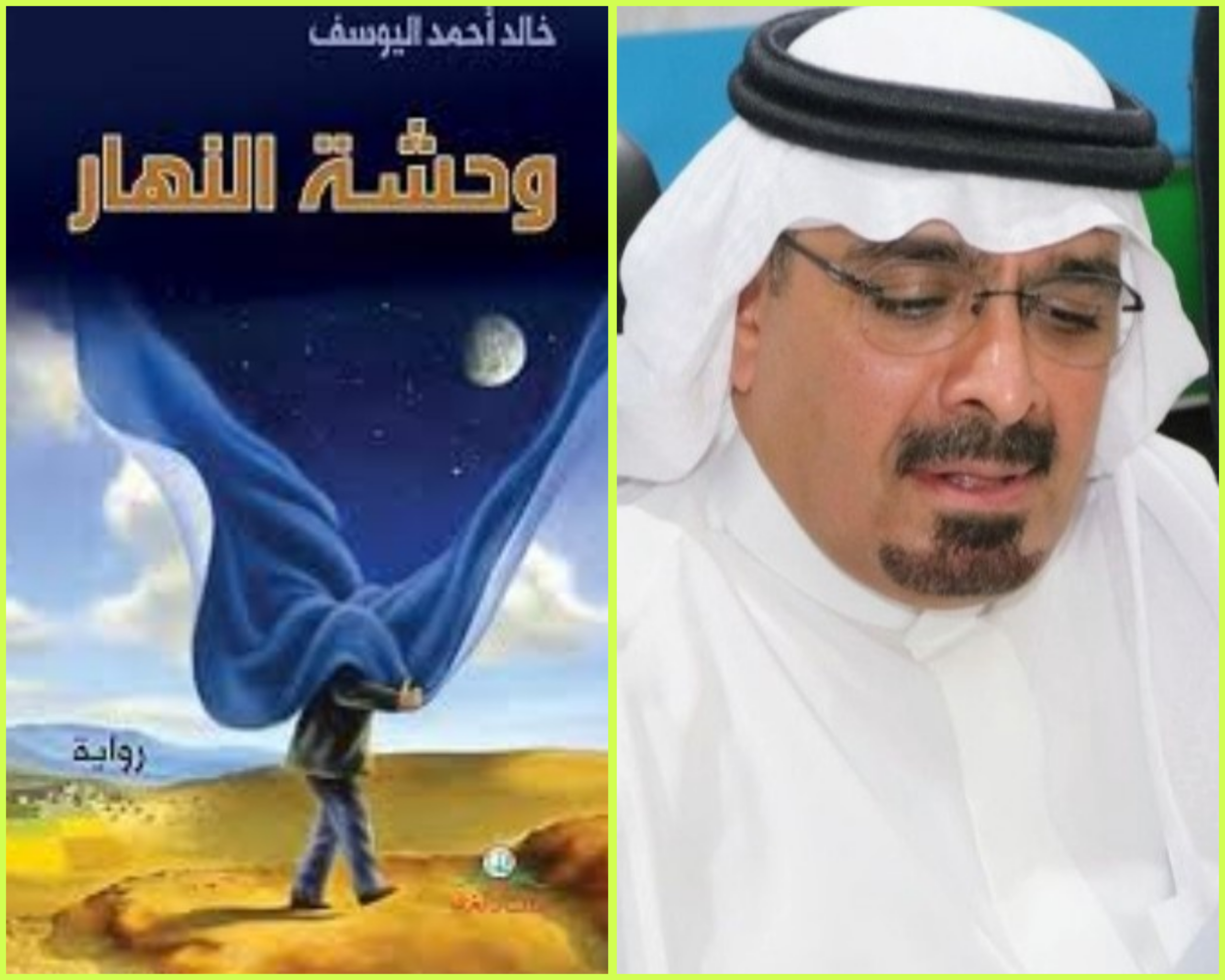
This time, my attention was drawn to The Solitude of Daylight, published by Arab Diffusion Company in Beirut in 2013. The novel spans 160 pages and immediately drew me in with a title that carries a striking psychological ambiguity. Solitude is usually associated with night, darkness, and deserted places. Yet attributing it to daylight gives it an entirely different resonance. Daylight here does not appear as a space of comfort or clarity; instead, it carries a subtle, underlying unease. From this simple paradox, the novel begins to construct its world. The reader enters its atmosphere from the very first pages, without lengthy introductions, and is quickly absorbed into the emotional state the text produces.
This direct entry reveals the nature of the experience from the outset. The novel is less concerned with intricate plotting or surprising turns of events than with portraying a heavy human condition that gradually takes shape, a condition marked by hunger, heat, and solitude, accompanied by a persistent sense of suffocation, subtle yet never entirely absent. Suhail, the novel’s central character, appears less as a protagonist driving the narrative than as a human being trapped within these circumstances. His crisis unfolds gradually, as though it is quietly eroding him from within. There are no dramatic outbursts, only a slow, steady wearing away over time.
In the novel, hunger is not a passing condition but a force that shapes how the characters perceive the world around them. Its impact extends beyond the body, affecting thought itself and reshaping one’s sense of place. Inside the house, everything appears ordinary on the surface, yet a certain weight clings to it: the bed, the walls, the smells, and even the empty spaces. The home no longer feels like a place of comfort; instead, it becomes an extension of the characters’ exhaustion.
Even the summer heat is not presented as a neutral natural element. It becomes part of the pressure surrounding the characters. Daylight does not bring clarity, as one might expect; instead, it intensifies the burden, as though light itself has stopped revealing and has become another source of fatigue. Here, the meaning of the title becomes clearer. Solitude does not emerge at night, as expected, but in broad daylight, when everything is visible yet nothing feels reassuring. Alongside this, the idea of a final testament moves quietly through the narrative, not as a direct event but as a lingering awareness that life is slowly edging toward its end without any clear transformation.
Following this opening movement, the novel turns toward memory and childhood. The rhythm softens slightly. The mother appears differently from the other characters. She carries a certain warmth, yet she is not idealized; she exists more as a memory than as a living presence within the text. When the mother says, “Your father never liked the city. He prefers the wilderness and its hardships to his home and its stability” (p. 12), the sentence seems simple, yet it opens a wider reflection on the father’s relationship with place. What emerges is not a choice between city and desert but an attachment to a harsh environment that has nevertheless become familiar and meaningful to him.
These sections bring childhood into sharper focus. The workshop, the cars, the wrenches, and manual labor all help shape the child’s understanding of the world, where things are grasped through lived experience rather than explanation. Even the father’s remark, “Come on, take the wheel; you are my right arm!” (p. 13), carries clear warmth, yet there is also a sense that this world will not remain unchanged for long. Friday, meanwhile, appears as a day unlike any other. As the narrator observes, “I feel that its hours and minutes are unlike those of any other day” (p. 14). This is not merely a religious or ritual distinction but an inner experience in which time itself feels uneven and differently lived.
The novel does not allow this peaceful image to remain intact. Instead, it breaks it with a deeply human moment. After killing a rabbit, the father reflects on what he has done, saying, “I have caused her children to become orphans and deprived them of their mother” (p. 20). This moment does more than shift the scene; it reveals an unexpected surge of guilt and opens a different perspective on the relationship between humans and nature, a relationship marked by both tension and responsibility.
On the question of identity and belonging, the novel approaches a central concern. Identity here is not presented as a fixed concept or clear definition but as something lived daily in a state of uncertainty. When Suhail is called “the Iraqi woman’s son” (p. 28), the phrase subtly signals an unstable sense of belonging. This uncertainty is inseparable from the transformations brought about by the arrival of the TAPLINE pipeline and the oil industry. Place is not merely a backdrop to events; it is part of the experience itself, changing while simultaneously shaping the characters. Rafha, the company districts, and the desert become spaces in flux, leaving little time for people to fully understand or adapt. Between an older, simpler world and a new economic reality, a suspended and unsettled identity takes shape.
In the later stages of the novel, we encounter the old company neighborhood, the emergence of reading, and a gradual withdrawal from society. The narrator writes, “The company’s old neighborhood suggests that its inhabitants have abandoned it; its night is no different from its day” (p. 80). The sentence does more than describe a place; it conveys a persistent sense of emptiness. As reading enters Suhail’s life, a different kind of solitude begins to form. It opens the world to him but simultaneously distances him from those around him, as though knowledge itself becomes a form of separation.
From a stylistic perspective, the novel relies on simple, restrained language that carries more weight than it initially suggests. The sentences are short and close to everyday speech, yet they convey a strong emotional atmosphere without excessive ornamentation. The narrative follows the protagonist step by step, without haste or abrupt jumps. The reader remains within a steady rhythm, quietly observing small details: shifts in mood, the influence of place, and the gradual unfolding of psychological states. This slowness is not a weakness in structure but an essential part of the experience.
In the end, The Solitude of Daylight offers a portrait of a person living in a world that appears familiar on the surface yet fragmented and unstable within. The novel explores identity when it loses its certainty, place when it undergoes transformation, and the individual when he feels detached from what surrounds him, as though everything were in motion while he himself remained still. Throughout all of this, the novel never states its ideas directly, nor does it linger on explanation. Instead, it allows the small details of Suhail’s life to unfold and generate meaning on their own. Its impact, therefore, is quiet: its central ideas are never explicitly declared but emerge gradually as the reader follows Suhail through the experience itself.