

Eid in Old Sana’a: A Joy Wrested from the Heart of Suffering
Yemenat
Mohammed Al-Mekhlafi
Abdullah Al-Qadhi, a resident of Old Sana’a, says, “In recent years, and this year in particular, Eid al-Fitr has become a heavy burden on families due to the harsh conditions the country is enduring and the prolonged suspension of salaries over many years.”
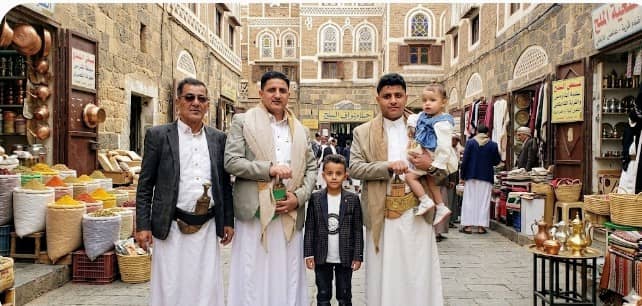
Eid al-Fitr in Yemen has its own distinct character, where the authenticity of Yemeni culture and its inherited traditions shines through. It is an occasion when relatives come together, greetings are exchanged, and people spend precious moments in the company of family and friends.
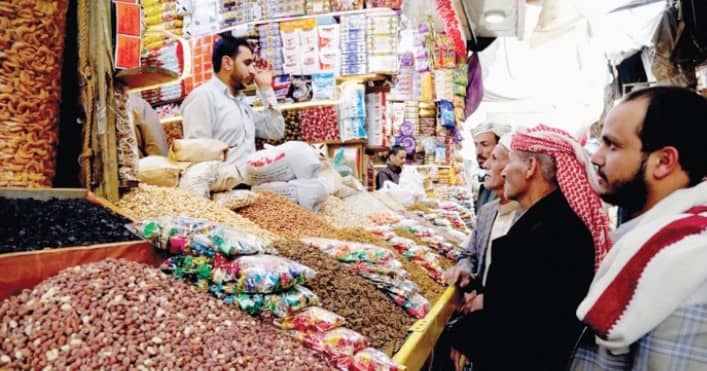
I remember how, before the war, we would prepare for Eid by buying new clothes even before Ramadan began. As the last ten days of Ramadan approached, we would carefully choose the jealah, the assortment of nuts and sweets set aside for the holiday.
When Eid finally arrived, the gardens would fill with our laughter, and sometimes we would venture beyond Sana’a to take in the breathtaking landscapes of Bani Matar, Al-Haymah, Al-Ahjur, and other regions. In some years, we even spent the Eid holiday on the shores of Aden or Al-Hudaydah.
Despite all this hardship, many families still strive to create an atmosphere of Eid with whatever means they have, preserving the spirit of the occasion within their homes so that children may still feel its joy.
In Old Sana’a, this devotion to Eid is especially evident. Despite scarce resources, its people hold fast to their traditions, traditions with a flavor all their own, almost like sacred rituals. In this way, every household feels that Eid has truly arrived, carrying its days in on a tide of quiet, enduring joy.
As the final days of Ramadan draw near, homes in Sana’a slip into a restless rhythm of preparation, with unceasing cleaning, the washing of linens, and the careful ordering of every corner.
Sometimes, the effort goes further, with walls freshly coated in gypsum or paint. This quiet frenzy continues day after day until the eve of Eid, as though the house itself longs to appear in its finest form.
Meanwhile, women repeat a familiar refrain: “Let Eid arrive to find the house spotless,” racing against time with tireless resolve.
At the same time, the search for clothing begins, no longer as easy as it once was. Many families now focus on buying clothes for their children, postponing their own needs, for the children’s joy alone is enough to fill the home with a fleeting happiness.
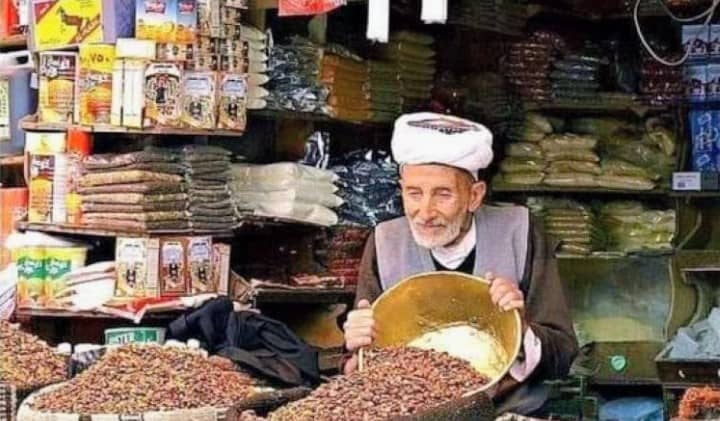
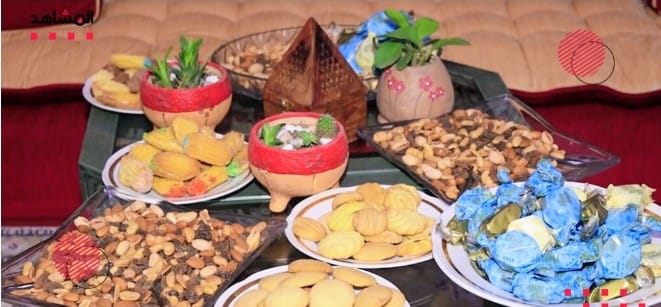
Alongside this, preparations for the jealat al-Eid get underway, the assortment of nuts and sweets offered to guests. Its contents vary from one household to another according to means. Some bring almonds, pistachios, and chocolates, while others make do with simpler offerings. Yet no home is without something to give. Women also take pride in crafting an array of homemade biscuits and pastries, each house infusing its welcome with a distinct and personal touch.
Sana’a’s streets remain vibrant and alive until the very last days of Ramadan, their bustle stretching into the early hours, voices rising and mingling until dawn. Yet with the arrival of the first day of Eid, the scene shifts with startling suddenness. By around nine in the evening, the city appears almost deserted, wrapped in a stillness deepened by the night, as though everything has paused for a fleeting moment. In the evening of the first day of Eid, at half past nine, I stepped out onto a street in Sana’a and captured a photograph, preserving that first night of Eid and its peculiar, almost uncanny calm.
At dawn on Eid morning, the women are already awake ahead of everyone else, preparing the festive breakfast, known as al-sabuh. Warm bread called sabaya is drizzled with honey and rich local ghee, accompanied by qishr coffee, its fragrance filling the house. In some homes, meat or liver is added depending on what is affordable.
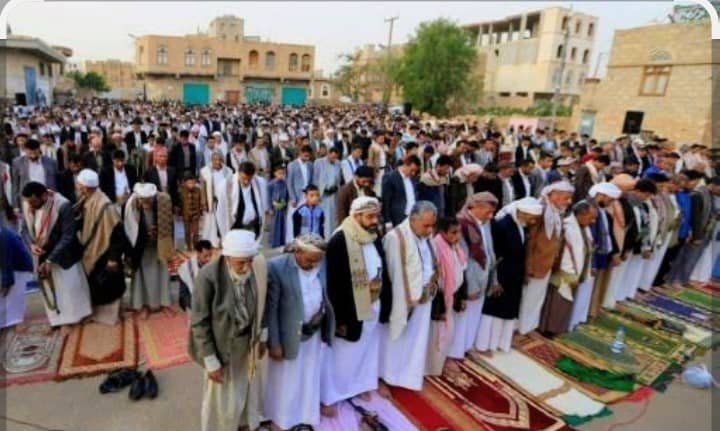
The head of the household then sets out with his children to the mosque, each dressed in what they can manage. In Sana’a, white garments prevail, complemented by a kut, a jambiya, and a shawl draped over the shoulders, an ensemble that reflects the city’s distinct identity.
After the prayer, handshakes begin and greetings rise warmly before everyone returns home to share the sabuh and prepare for a long day of visits.
Eid visits, known locally as al-salam, begin early in the morning. By then, the women have already prepared the sitting rooms, arranged the jealah and homemade biscuits, and set out coffee, tea, and incense. Al mu‘ayyiden, men who visit their female relatives, arrive in a steady flow yet stay only a few brief minutes, for many visits still await them. Warm welcomes fill the air, mingled with gentle reproach: “Why are you in such a hurry? We’ve barely seen you!” To which one of them might reply with a smile, “We still have many homes to visit.”
Amid this haste, the moments are not without their lighthearted charm. A cup of coffee may spill, or an incense burner might slip from someone’s hand, yet all passes in soft laughter. Before leaving, al mu‘ayyiden reach into their pockets and bring out ‘Asb, small sums of Eid money, to give to the children. It is the moment the young eagerly await, as they move from house to house, counting what they have gathered with growing excitement. In homes where giving money is not possible, children’s pockets are filled instead with sweets and nuts, enough to spark their joy, for the ‘Asb remains an inseparable part of Eid’s cherished memory.
By midday, the pace slows, and the household gathers for lunch, which often includes traditional Yemeni dishes such as shafut, harish, saltah, rice and meat, alongside other local favorites like bint al-sahn, ‘asid, and susi. This is a moment of rest after a long morning, as everyone sits together, exchanging conversation and reliving the day’s memories.
After the meal, the men head to the maqyil, the afternoon gathering usually held at the home of the family’s eldest, while the women continue their visits or receive female guests of their own.
On the second and third days of Eid, the visits continue at a gentler pace. People begin to venture out for strolls in the outskirts of Sana’a or into the city’s gardens, while those who are better off may travel to Al-Hudaydah or Aden.
Circumstances may change and life may grow harder, yet Eid remains ever-present because the people insist on it. They create it from what little they have, live it as best they can, and leave their children with memories that whisper that joy is possible, even in the darkest times.
I hope this suffering in Yemen will soon come to an end, and that happiness will return to every home. May every year find Yemen well, and may every Eid find hearts still able to find their way to joy.