

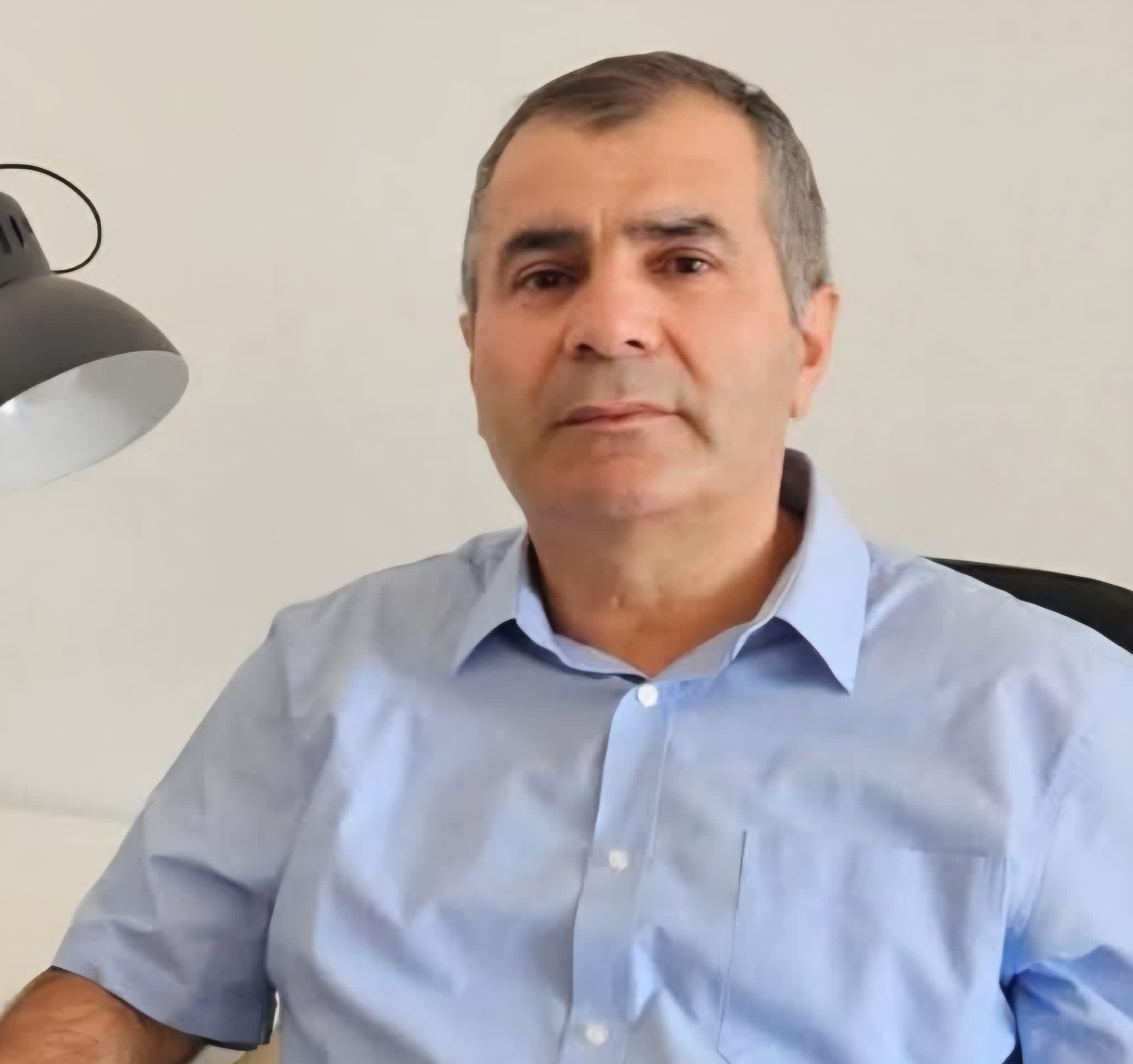
Abil Hasanov: To Read Is to Think, and To Think Is the Beginning of Freedom
Yemenat
Interview by Mohammed Al-Mekhlafi
Abil Hasanov came of age during a defining chapter in Azerbaijan’s history. He lived through the final years of the Soviet Union and the rise of the independence movement, and his perspective was further shaped by the difficult experience of the Karabakh war.
This turbulent background did not simply pass through his life. It shaped his vision and formed him into a writer and journalist who sees the world through layered and interconnected perspectives.
Today, Hasanov lives in Germany, far from his homeland and family. However, distance has not diminished his cultural depth. Instead, it has enriched it. He writes in several languages, including Azerbaijani, Turkish, German, and Russian, and he considers each language to be a distinct intellectual space that offers a new way of thinking and expression.
In this interview, he reflects on his childhood, his writing, and his sense of belonging across cultures. For Hasanov, words are not merely tools. They are a way to understand himself and to express his experience of exile.
To present his perspective as directly as possible, I contacted him by email and conducted this detailed interview.
1.To get started, could you introduce yourself to our readers?
Abil Hasanov is a traveler moving between words and time. He is someone who finds it difficult to step back and observe himself, because the question of identity does not have a simple answer, especially for a writer.
I am an Azerbaijani writer, walking along a narrow path where literature, philosophy, and political thought meet. I write in Azerbaijani, Turkish, German, and Russian. Each language represents a complete intellectual world. I see the world through words, and I try to draw meaning from the very heart of reality.
Beyond the writing and the philosophy, who is Abil Hasanov in his everyday life?”
At home, I am simply a father and a husband. When I spend time with my children, the complexities of the world fade away. Books, music, and long walks in the forests of Germany are the moments in which I renew myself. Sometimes I walk without thinking about anything at all, and these moments of silence are the most fertile ground for creativity.
Take us back to your childhood. How did you experience the world as you were growing up?
My childhood coincided with the final years of the Soviet Union. It was a time full of contradictions. There was neither complete freedom nor complete stability. Books were the quietest part of our home, yet they spoke the most. My father’s library was my first world. It included Tolstoy, Jafar Jabbarly, and classical Azerbaijani poetry.
My childhood memories are marked by two contrasting images. One is the darkness of the collapse of the Soviet Union and the concern visible on the faces of our mothers. The other is the deep warmth of the Azerbaijani land.
How did you enter the world of creativity and writing?
It was not a coincidence. It felt more like an unavoidable destiny. I realized that I could not organize my inner world except through words. As Nasimi suggested, the word is hidden within the essence of existence, and writing is an attempt to bring that hidden truth into the light.
You witnessed the collapse of the Soviet Union and the independence of Azerbaijan. What impact did these events have on you?
When the independence movement began in 1988, I was deeply involved. I was present in the streets and in demonstrations, experiencing the spirit of that historic moment. I was an active participant. Then, in 1991, everything changed.
The Karabakh war was the most painful experience. It brought bloodshed, displacement, and loss. From that point on, I understood that writing should not focus only on what is beautiful, but on what is necessary.
From Azerbaijan to Turkey, and now Germany—how have you managed to navigate these different cultures while holding onto your identity?
It was not easy, and this challenge made me stronger. Each country revealed a different part of my identity. Hermann Hesse influenced my inner world, and Victor Hugo shaped my sense of social responsibility. However, to preserve my identity, I always returned to Nasimi and Fuzuli. They remain my foundation.
I am an Azerbaijani writer living in Europe. I did not abandon my identity in order to adapt.
You bridge the gap between the imagination of a novelist and the precision of a political analyst. How do you strike a balance between those two roles?
For me, they are not separate. They are part of the same whole. Politics represents the external form of human drama, while literature expresses its inner voice. In literature, I use metaphor. In analysis, I rely on facts. Truth often exists where these two meet.
What inspired you to write The Abandoned Homeland?
It was shaped by two separations and two experiences of exile. The first took my childhood from Western Azerbaijan by force. The second took my youth due to political pressure that forced me to leave again.
The Abandoned Homeland is not simply a place. It represents an abandoned language, an abandoned memory, and an abandoned truth. Sometimes a person loses their homeland twice, once by force and once in the name of truth.
How would you describe your experience with content creation on YouTube?
The written word has depth, but the spoken word has life. YouTube allowed me to connect directly with listeners. Speaking in front of a camera changes how you think about language. You become more careful with every sentence because it can reach thousands of people instantly.
You once said that the writer is the conscience of his time. How do you express this idea?
Being the conscience of an era is not easy. In a time characterized by speed and lack of depth, the role of the writer is to step outside the flow, to pause, and to speak the truth, even when it goes against the dominant spirit of the time.
Tell us about your most important published works and your upcoming projects?
My book The Fear of Losing Love, published in Turkey, includes twenty three short stories that explore themes of freedom and justice. I am currently working on two projects.
The first is a screenplay, which represents a new creative direction based on visual storytelling and movement.
The second is a new book that is still forming and gradually finding its voice.
Finally, how would you like to conclude this interview?
Words are the moment when a human being comes closest to eternity. The world does not always offer hope, but words always leave a possibility open.
My message to readers is simple. Read widely, not only my work, but everything. Reading is thinking, and thinking is the beginning of freedom.