

New York as a Fragmented Linguistic Body: A Reading of Ahmed Al Zera’ei’s Poetry
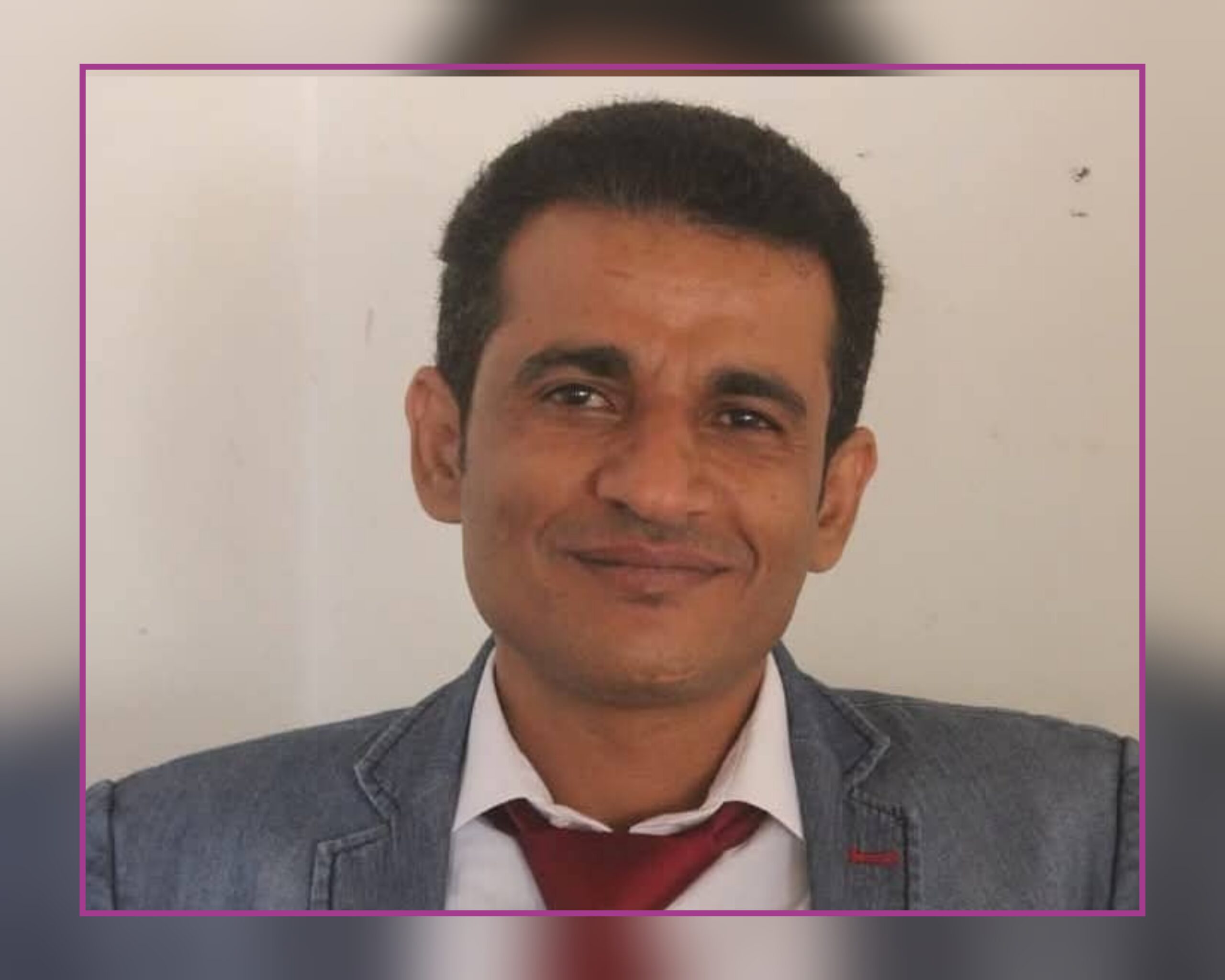
Yemenat
Fares Al Alayi
In this poem, New York is not merely the name of a city; it is a trial of the world’s center when stripped of its composure. The poet, Ahmed Al Zera’ei, whose poetic journey weaves philosophical inquiry with a modernist mastery of imagery and displacement, does not write the city as a mere geography. Instead, he renders it as the zenith of civilizational density, a structure that language can deconstruct down to its final layer of stability.
New York here is more than just an American metropolis. It is a signifier of a world that has reached the peak of its organization only to begin fracturing from within. Thus, it emerges not as a background, but as a center being linguistically detonated.
The cardinal points awaken, yet the compass finds no center.
This line illuminates the crisis of losing direction and the disintegration of the very idea of a center that makes orientation possible in the first place. The world here is not lost within a physical space, but within its own concept of order. The directions search for a path, seeking the meaning of a center that might justify the existence of the roads themselves.
Here, a fundamental transformation occurs. The city that once represented the ultimate weight of the global order is transmuted into a suspended being. The bird is not merely a symbol of freedom, but a signifier of the center’s detachment from its earthly condition. It is as if civilization itself has lost its moorings, remaining suspended in its most fragile form. This is not a purely aesthetic metaphor; it is a profound reconfiguration of the world’s relationship with its centers. The poet does not describe New York but interrogates the very possibility of a central city in a world that no longer believes in fixed axes.
It is here that Al Zera’ei’s modernist expertise is revealed, found in the way things disintegrate within language. He does not construct images to decorate the world; he places the world in a state of perpetual trial within the image. In another passage, the language seeps into more turbulent territory:
Perhaps it is the languages that have preyed upon their speakers.
The relationship between man and language undergoes a radical shift. Language is no longer a tool of expression but a force acting against those who speak it. This shift reveals a deep poetic consciousness: that language is not transparent but an entity unto itself, and that the speaker is not the master of the sentence but one of its many echoes. This elevates the text beyond a mere meditation on a city into an exploration of the conditions of speech itself.
When we revisit New York through this lens, it appears as a point of immense pressure in the global consciousness, particularly following the major shifts of violence at the dawn of the twenty first century. However, the text does not treat events as direct references, but as a tremor in the world’s image of itself. It is as if the city ceased to be a place once it became a sign of the fragility of meaning.
The poem advances as a dual linguistic movement. Every time it nears the fixing of an image, it pushes it toward evasion. Every time it attempts to build meaning, it reveals that meaning is nothing more than a fleeting layer over a deeper void. The images in the text are not stable metaphors but impossible intersections: fire in water, a forest dying within a woman’s body, or waterfalls recoiling to their roots. This way of speaking strips things of their natural certainty, returning them to a state of possibility rather than definition.
In this sense, New York is no longer the city of the world but a test of the very idea of the world when it loses its ability to settle within a single name. It is not just a symbol of power, but of the limits of power when translated into language. In the end, nothing remains of New York but its linguistic trace: a city that stands not upon the earth, but upon its final possibility within language.
New York: A Bird Without Land
By Ahmed Al Zera’ei
I did not know that my steps,
As I raced across this senile earth,
Left behind with every stride a forest,
And a woman carrying all the splendor of lilies
In her harmonious bed;
With the agony of the world’s waterfalls,
And the retreat of forests into their vanished lineages,
Within the scent of roots.
O Mother, I harvest the ecstasy of slaughter,
Plucking a crumbling pear in the eye of the cosmos.
The cardinal points awaken without a center for the compass,
And the Golden Pheasant hovers, a bird without land.
Perhaps it is the languages that have preyed upon their speakers,
Where the vanishing of gods is mirrored in the passing
Of wrinkled ebony in the corpse of the shattered
Forest, in the scattered limbs of a perished scent.
Certainty dissolves in the onslaught of doubt, just as
Eternity retreats to its dream after the passing of things.
Perhaps it is the dream of eternity lurking within the bubble of time,
And the fading music of the Neanderthal, clutching
The burden of his insight, as he attempts death
In his singularity.
What certainty and what doubt?
Here is a blade of grass breaking from its Swiss watch,
Escaping into the fossils of fire.
I weep for New York because I am collapsing
At the edge of the earth.
The rooster of fire crows in the depths of the seas,
Because a cosmic queen has lost the radiance latent
In heroin.
The world without America is a world without a library;
The universe without New York is a universe without a city.
Give me a poet like Walt Whitman, and let
All the heads of your emperors go to the cosmic trash.
Give me the body of Marilyn Monroe,
Stuffed with the verdure of the earth,
And let all your women go to hell.
Directions erase themselves
Within the pale concrete
Of stones carved into music.
Time is a spring growing old in the stone of darkness,
A goat gnawing at paradise
In a green leaf,
And the wind is a lover’s hand shaking the flesh of the distant,
Dwelling in the bricks of the mountain.
The wind is my hand, reaching
Toward its grief in the clay of a land
That was once here.
I shall go into the tiger’s wound,
I shall prepare a feast for the gypsies of the world,
And crown the rooster of futility
So he may chant the psalms
In the cave of the world.
Perhaps his voice will create the joy of purple.
I shall build ruin upon the edge of the abyss,
And overturn language upon the sofa
Of metaphysics;
Then, I shall point the world toward the ruin
Of the future
In the wings of a fly.
Light has preyed upon my window,
And the sunset poured
Into the youth of the eye.
My eyes blinked their rare lineage
Of stallions
Toward the peak of the mountain
Shouting at the sea.
There is a sun setting in the darkness of my fingers;
Hashish smokers of all languages
Rise from my tobacco roll
Toward the legacy of the star.
I saw Sayf ibn Dhi Yazan
Wearing his country,
Handing the totem the key of the Queen,
While the music ascended in piety,
Resembling the final earthly sunset.
The butterfly was destroyed
In the childhood of the earth,
Under a weight that humbles the rose.
The dreams of the neglected flower piled up
On the wings of a sparrow.
The butterfly landed,
And the rock of the world shattered.
The butterfly took flight,
And the depths of the rose wrinkled.
I am the one collapsing in the firewood of the lineage,
Exhorting the memory of the genome sleeping
In the eye of the slain Babylonian Roller bird.
I lean upon a senile sun
In the darkness of chemistry;
Without directions, I hang
A cluster of ruin
Upon the rack of war.
I hum New York;
It burns, while I collapse
At the edge of the earth.