

The Waiting Years
Yemenat
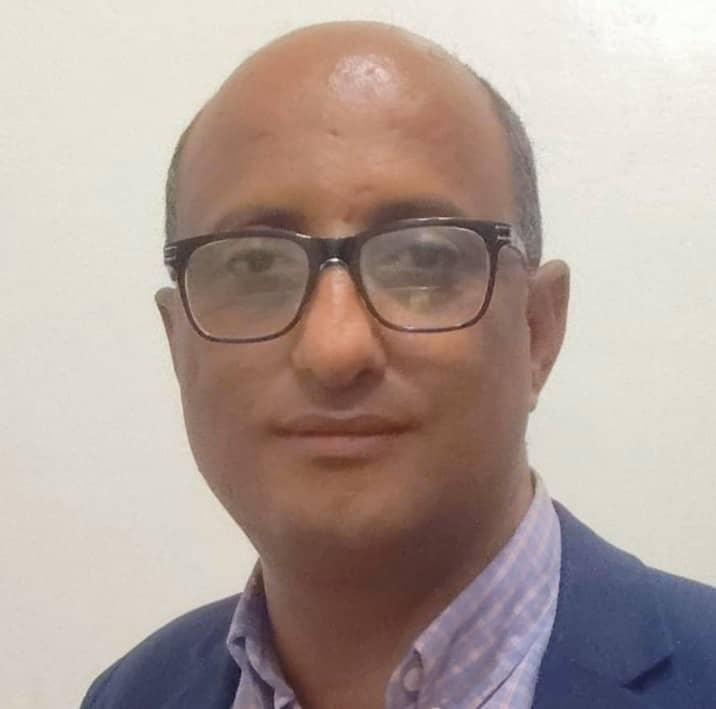
Mohammed Al-Mekhlafi
On one of Aden’s warm nights, in February 2004, I lived my last evening in the city that had sheltered me for years. I had just completed my university studies and earned a bachelor’s degree in English literature.
That night, my friends and I gathered in the apartment of my companion, Mutasem Al-Aodaini, in the Triangle Building in Khormaksar district. The room brimmed with friends; we shared conversations, chewed qat, and relived our most cherished university memories. We spoke of the past and painted visions of the future, yet beneath the laughter a quiet sorrow of farewell stirred within me.
I knew I was on the brink of leaving the city that had opened its doors to me when I first arrived from my small village in Mekhlaf Sharab, north of Taiz. In Aden, I studied and worked—serving as a media officer at the Office of the Security Director, as a journalist for The Yemen Times, and briefly as a media officer at the French Cultural Center. In this city, I forged unforgettable friendships and experienced my first love beneath the trees of the college campus—a love that never reached its completion, yet left an indelible mark upon my heart.
I left Aden for Sana’a, though my heart remained behind. In Sana’a, I worked as a translator and editor for Akhbar Al-Youm, then moved to Al-Liwaa newspaper. Later, I became a tour guide with the Universal Touring Company, a role that allowed me to journey through most of Yemen’s cities.
During that time, I wrote a reportage titled “From Hajjah to Hadhramaut: Landmarks That Speak the Legacy of Yemeni Creativity” It explored archaeological sites and tourist destinations, while shedding light on wedding traditions across the diverse cities of Yemen. Those were radiant days, brimming with experiences and memories. They awakened in me a passion for discovery and gave me the profound conviction that Yemen is a living book, forever open to beauty and diversity.
I later married, and on the very day of my wedding, I was offered a position at the Ministry of Education. I left the field of tourism and turned to teaching at Al-Thawra School in the village of Hadda. During that period, I attended a teacher training course sponsored by the European Union—an enriching experience that greatly benefited me and paved the way for my work at MALI Institute, then regarded as one of the oldest and finest English-language institutes in Sana’a, where salaries were paid in dollars.
I taught in the mornings at Al-Thawra School and continued my work in the afternoons at the institute. During that period, I lived a calm and balanced life, where family stability harmonized with professional success. It was, without doubt, one of the finest chapters of my life.
At that time, I was awarded a scholarship from the German DAAD organization, offered through the Ministry of Education. I carefully prepared all the required documents and submitted them to the ministry office, which was expected to forward them to the German embassy. Later, however, we were surprised to discover that the office had failed to inform us of the need to secure prior admission from a university of choice. As a result, I was forced to postpone the scholarship to the following year. The disappointment was profound, but it never extinguished my hunger for learning.
The next year, during the new application period, I had to travel to Cairo for medical treatment. When I returned, I found my homeland on the threshold of a new wave of turmoil—an era of the so-called Arab Spring that dragged many countries, Yemen included, into a spiral of unrest and sweeping change.
Gradually, work conditions began to deteriorate. I applied to another educational center and was accepted with a higher salary paid in dollars. Yet, after only four months, the war in Yemen erupted. For seven long months, we were left without work and without salaries.
Eventually, we had no choice but to return to work despite the war and relentless bombardment. This time, however, salaries were paid in Yemeni rials, and for far less than what we had once earned in dollars. As the situation worsened, wages became insufficient to meet even basic family needs. Matters grew more difficult still when salaries were cut by an additional 20 percent, making survival under such conditions an arduous struggle.
Alongside my work in teaching, I continue to nurture my literary contributions by publishing articles in local, Arab, and international newspapers and websites, all without any financial reward. I also work as a translator and, so far, have translated five books for modest fees. In doing so, I preserve my passion for words and language despite all hardships, for words have always been my sanctuary.
Many of my colleagues have been compelled to leave the country in search of better opportunities, leaving behind their families and homeland to face the hardships of exile. Even I, two years ago, seized a job opportunity abroad, hoping for a new experience, but fate was not on my side, and I returned to my homeland.
At this stage in life, one often feels incapable of fully meeting the needs of their family. After years of labor and dedication, thoughts turn to emigration and starting anew, in pursuit of stability and a better future.
My colleague, in his mid-forties, had lived a calm and stable life with his family, so close to his children that he scarcely parted from them. He was present in every detail of their lives: their play, their laughter, even their tears. A few months ago, he was forced to travel to another country, leaving them for the first time. To this day, he awaits the permit that would allow him to work.
Imagine this scene: a four-year-old child runs to the door at the sound of his father’s footsteps, stretches out his tiny arms, and murmurs in a trembling voice, “Papa… Papa… Papa…” The father envelops him in his arms, holds him close to his chest, closing his eyes to breathe in the fresh scent that fills his very being. He studies the child’s face, his innocent features, his smile, his laughter, even his tears when he insists on accompanying him to work.
But suddenly, that father finds himself in a distant land, alone with his memories, where every passing moment is filled with the ache of longing and the sting of absence.
Time moves on… and the father eventually returns from his exile, burdened with yearning and anticipation, only to discover that the small child has grown; his features have changed, his voice has deepened, and his steps have widened. Standing before him, the father feels bewildered, searching in that face for traces of the child he once left behind, looking in his eyes for the glimmer of first innocence. What a harsh and profound feeling it is—one that mingles joy and sorrow all at once!
Through war, chaos, internal division, and external intrigues, life in this homeland has been reduced to a daily struggle: striving to secure whatever is possible for survival, or embarking on the adventure of migration in search of a glimmer of hope, leaving behind the memory of places and the spirit of loved ones.